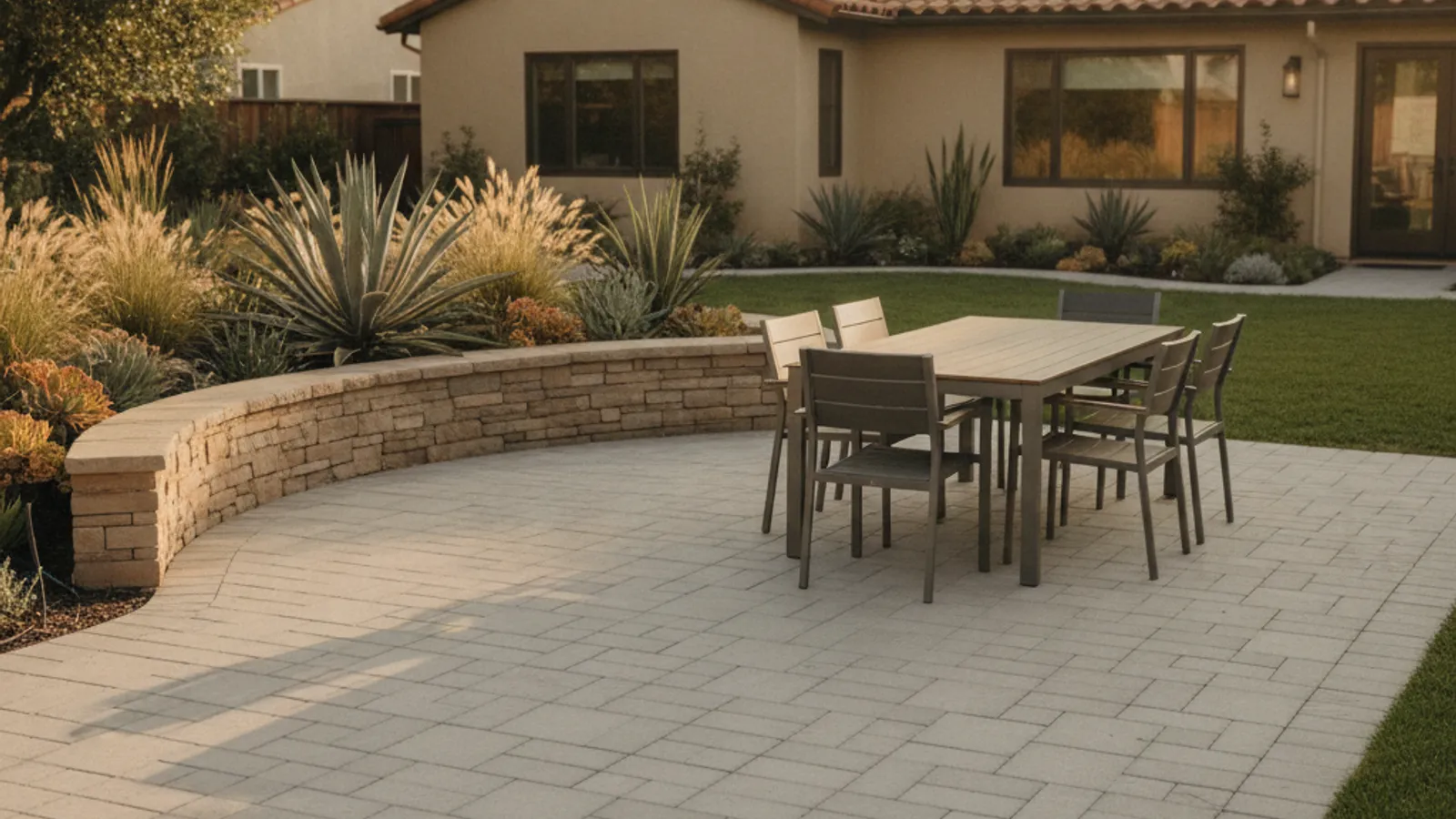
The best water features for San Diego yards are compact, recirculating designs without stagnant pockets. A pondless waterfall, wall fountain, or small basin cycles the same water and only needs top-offs as water escapes or evaporates. That makes it easier to pair moving water with a drought-tolerant landscape than a broad, still pond.
Which water features work well in San Diego?
The right design depends on available space, sun, wind, and maintenance tolerance. A small coastal patio needs a different feature than an inland estate lot.
-
Wall and spillway fountains fit narrow patios and compact yards. They create sound without taking over the usable floor area. Their contained shape can also make screening and placement easier on HOA-managed properties.
-
Pondless waterfalls send water over stone into a covered underground basin. They provide movement without leaving a large open pond. This format suits homeowners concerned about stagnant water, exposed basins, or limited yard space.
-
Container gardens and basalt column fountains work well near seating areas. They have a small footprint and can become part of a patio design. Splash distance still matters, especially beside doors, furniture, or walkways.
-
Traditional koi ponds have the largest open surface and the heaviest upkeep of these options. They need careful planning for circulation, debris, algae, and animal care. Larger lots around Rancho Santa Fe may have room, but space alone doesn’t make a pond the right choice.
Start with the experience you want. Moving water can soften traffic noise, create a focal point, or add interest beside a patio. The feature’s size should follow that purpose.
A local landscape design professional can fit the water feature into the whole yard. That includes planting, circulation paths, seating, lighting, and drainage around the feature.
How should coastal and inland homeowners choose differently?
Location changes which materials and maintenance issues deserve attention. San Diego County’s coast and inland communities shouldn’t receive the same default design.
In Carlsbad, Encinitas, Coronado, and La Jolla, ask how exposed metal parts will handle salt air. Pump housings, fasteners, spillway edges, and decorative metal finishes deserve close review. Stainless or coated components may be better choices where salt exposure is a concern.
Our Carlsbad landscaping guide explains how coastal conditions shape broader yard decisions. The same thinking should carry into fountain materials and equipment placement.
El Cajon, Santee, and Rancho San Diego bring stronger heat and sun exposure into the discussion. An open basin in full sun may need closer algae monitoring and more frequent top-offs. Partial shade can help, but the design shouldn’t place messy trees directly over the water.
Exposed lots also need a plan for wind. Santa Ana wind events can leave dust, leaves, and small debris in basins and intake screens. Ask whether the feature can be cleaned without moving stonework or draining a large pond.
Deep-freeze winterization is less central here than in many national water-feature guides. San Diego owners usually get more value from planning around sun, wind, salt exposure, and dry periods.
Can water features fit a water-conscious San Diego yard?
Yes, a compact closed-loop feature can fit a water-conscious design. The pump recirculates water instead of drawing a constant new supply. Water still leaves through evaporation, splash, and maintenance, so every design needs an accessible top-off plan.
This isn’t the same water-use pattern as irrigating a lawn. It also doesn’t remove the need to control leaks and runoff.
Within the City of San Diego Public Utilities service area, permanent rules allow potable landscape watering only before 10:00 a.m. or after 6:00 p.m. The city also prohibits irrigation runoff and watering during or within 48 hours after measurable rainfall. Other San Diego County water agencies may have different rules, so homeowners should confirm current requirements with their provider.
Those restrictions make water planning part of the larger yard design. Our guides to San Diego water rates and lawn decisions and xeriscaping in San Diego cover that wider context.
A water-conscious proposal should explain where water can escape. Look at splash outside the basin, overspray in wind, exposed surface area, and hidden plumbing. A dramatic feature that constantly wets surrounding pavement may be poorly matched to the site.
How do you prevent stagnant water and mosquito problems?
Continuous circulation is the starting point. Water can become a concern when it sits still in a basin, clogged channel, or decorative pocket. The design should move water through every exposed section.
Ask the installer to show the complete path. Water should travel from the basin through the pump, over the visible feature, and back into collection. The plan should also explain what happens when leaves block an intake or the pump is turned off.
Pondless waterfalls reduce the amount of open water because the storage basin sits below a cover. Wall fountains and column fountains can also work when their basins remain easy to inspect.
A traditional pond needs more attention. Check for corners with weak circulation, shelves that collect debris, and areas hidden behind stone. Decorative complexity shouldn’t make standing water difficult to find or remove.
Canyon-adjacent yards may collect more leaves and plant debris. Easy access to the pump and intake can matter more than adding another decorative tier.
What should you check before installation?
Start with sun exposure and the feature’s relationship to the house. A fountain may look attractive in a rendering but create glare, splash a window, or overwhelm a small seating area.
Next, review the pump plan. The pump must match the feature’s lift, channel length, and desired flow. A weak flow can flatten the intended waterfall effect. An oversized flow can push water beyond a narrow basin.
Ask where the power will come from and how outdoor electrical protection will be handled. Electrical requirements should be confirmed for the actual property by the appropriate jurisdiction and qualified professional. Extension cords shouldn’t become the permanent design plan.
Access matters too. Covers, intake screens, pumps, and collection areas need cleaning. Stonework shouldn’t trap the parts that receive routine attention.
If the feature joins a patio, seat wall, or outdoor room, plan them together. Our San Diego backyard remodeling guide shows how water features relate to larger yard projects. The hardscaping service page covers the patios and walls that often frame them.
Retaining walls deserve separate review. Within the City of San Diego, a building permit is required when a retaining wall exceeds three feet, measured from the top of its footing to its highest point. A shorter wall can still require a permit when it supports a surcharge load or steep backfill. Confirm the design with Development Services before construction begins.
HOA approval is another property-specific question. Read the CC&Rs and ask whether the association requires screening, limits visible basins, or reviews exterior changes. Get the answer in writing before ordering equipment or stone.
How should you compare water-feature proposals?
A useful proposal explains the system, not just its appearance. Compare each option using the same questions.
| Decision point | What the proposal should explain |
|---|---|
| Feature type | Why a fountain, pondless waterfall, or pond fits the property |
| Water path | Where water collects, circulates, splashes, and receives top-offs |
| Sun and wind | How exposure affects placement and cleaning |
| Equipment access | How the pump, intake, and basin cover can be reached |
| Materials | Why exposed finishes fit coastal or inland conditions |
| Electrical plan | Where power comes from and who confirms requirements |
| Ongoing care | Which parts need skimming, rinsing, or seasonal cleaning |
| Site approvals | Whether HOA or local permit review may apply |
Price will depend on the feature type, dimensions, access, materials, electrical work, and surrounding hardscape. Request itemized quotes from local professionals. Compare what each proposal includes before comparing totals.
Frequently asked questions
Do water features use a lot of water in San Diego?
Recirculating features reuse the same water within a closed loop. They still need top-offs for evaporation, splash, and cleaning. A compact basin with controlled splash generally gives homeowners more control than a wide open pond.
Do backyard water features attract mosquitoes?
They can become a problem when water remains still. Choose a design with circulation through every exposed area, then keep the intake clear of debris. Check hidden pockets after the pump has been off.
Is a pondless waterfall better than a pond?
A pondless waterfall is often the easier choice for a compact, water-conscious yard. It removes the large open basin and keeps stored water beneath a cover. A pond provides a different look but requires more planning for debris, circulation, algae, and animal care.
Does an HOA need to approve a water feature?
Approval depends on the property’s governing documents. Check the CC&Rs for rules covering exterior changes, visible equipment, standing ponds, and screening. Submit the design before work begins if architectural review is required.
How much does a San Diego water feature cost?
Cost depends on the feature’s size, materials, pump, electrical needs, access, and surrounding hardscape. A container fountain and a custom koi pond aren’t comparable projects. Get itemized quotes based on the same written design.
How much upkeep does a water feature need?
Every feature needs some upkeep. Typical tasks include removing debris, checking water levels, clearing pump intakes, and cleaning accessible surfaces. Inland sun, coastal exposure, nearby trees, and Santa Ana wind debris can change the workload.
Bloom Pro SD connects San Diego County homeowners with licensed, independent local landscaping professionals. Call (760) 400-6355 to discuss your yard and get matched with a local pro.