The better driveway material depends on the site, base preparation, drainage, finish, maintenance plan, and written warranty. A generic price or lifespan comparison can hide differences in excavation, access, grade, and repair scope, so use this guide to ask both bidders for the same information.
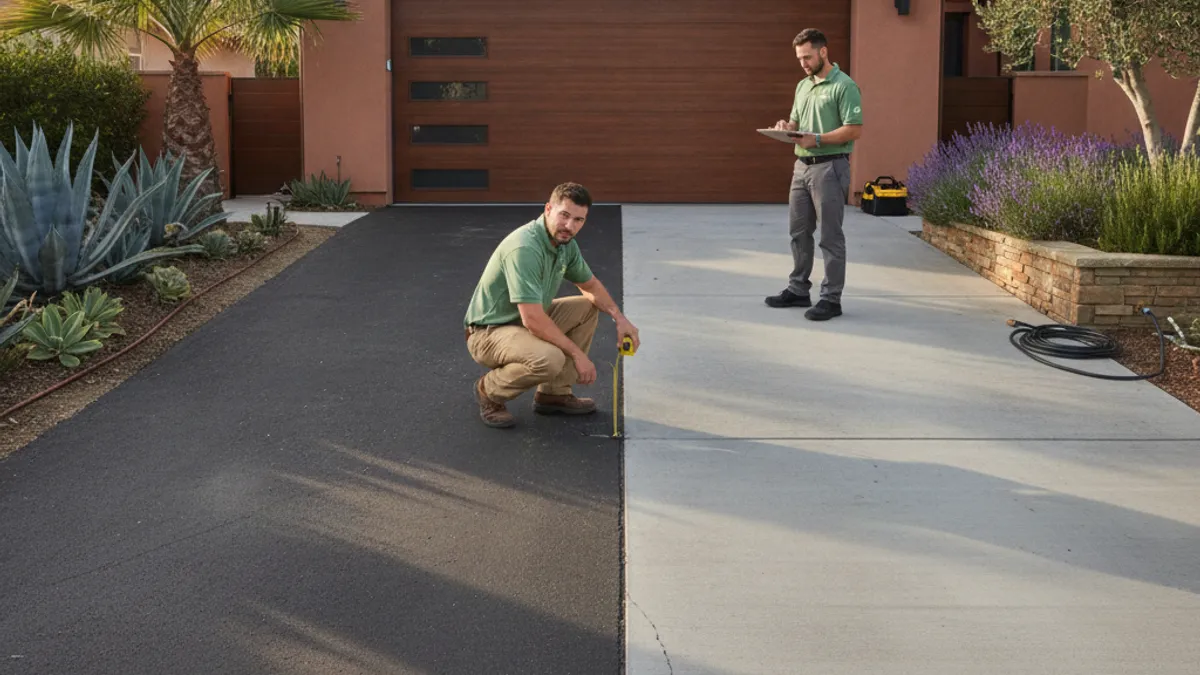
Cost comparison
Ask each bidder to itemize demolition and haul-away, excavation, compacted base, drainage work, reinforcement or mix specifications, surface thickness, edges, finish, curing or use restrictions, permits, and warranty. Then compare maintenance and eventual repair assumptions separately. Material alone does not establish the installed price or service life.
Why San Diego’s soil and climate change the answer
Soil movement can stress either surface. A contractor should assess the actual soil and drainage, then specify excavation, compaction, base material, thickness, and joints for the site. Ask how wet areas, roots, utility trenches, and prior settlement change that scope.
Our intense summer sun and long dry season matter differently for each material. Asphalt is petroleum-based and softens in direct heat, which is why steep San Diego driveways in full afternoon sun can develop soft spots or minor rutting under a parked car’s weight during a heat wave. Concrete doesn’t soften under heat, but it does expand and contract with temperature swings, which is exactly what control joints are designed to manage.
On a hillside or canyon lot, have the contractor document the grade, drainage path, edge restraint, vehicle loads, and proposed surface. The design and installation specification matter more than a blanket claim that one material always performs better on a slope.
Repair cost when something goes wrong
Small cracks, settlement, or ponding can reveal different underlying causes, so a repair quote should state whether it treats only the surface or also corrects the base and drainage. For asphalt, ask how the patch will be cut, compacted, and sealed and how visible it will remain.
For concrete, ask whether a crack is cosmetic, moving, or associated with settlement and whether the proposed fix is sealing, leveling, or section replacement. Include demolition, disposal, finish matching, and any drainage correction in the comparison.
Maintenance reality for each
Asphalt maintenance recommendations vary with the mix, condition, traffic, and coating product. Ask the installer for a written inspection and maintenance schedule, including when sealing would or would not be appropriate.
Concrete needs very little routine maintenance if it’s installed correctly with proper control joints and base prep. The main upkeep is occasional sealing to resist oil stains and, in our case, a periodic rinse to keep hard water and mineral deposits from irrigation overspray from building up on the surface.
Which one actually makes sense for your property
Choose after comparing equivalent written scopes and the priorities that matter on your property: upfront budget, appearance, traction, grade, heat exposure, maintenance, repair visibility, and warranty. If bids recommend different base depths or drainage work, resolve that difference before comparing totals.
For the broader picture on hardscape material choices across your property, including patios and walkways, see our retaining wall materials guide, which covers similar durability tradeoffs for a different application.
What the crews we match you with cover
Our hardscaping service covers landscape features such as walkways, patios, and retaining walls. If a driveway touches that work, ask the driveway contractor and landscape contractor to define their boundaries, elevations, drainage responsibilities, and sequence in writing.
Frequently asked questions
Which lasts longer, asphalt or concrete, in San Diego? No single lifespan applies to every driveway. Base preparation, drainage, thickness, mix, traffic, sun exposure, maintenance, and repairs all matter. Compare the written material and workmanship warranties for the proposed systems.
Does San Diego’s clay soil cause driveway cracking? It can, for both materials, if the base isn’t properly compacted before installation. A well-prepped crushed-rock base with correct depth handles clay movement far better than skipping base prep to save on install cost, regardless of which surface material you choose.
Does asphalt really soften in San Diego heat? Asphalt performance in heat depends on the mix, installation, traffic, and site exposure. Ask the paving contractor to specify the proposed material for the driveway’s grade and expected vehicle loads.
Is concrete better for a sloped San Diego driveway? It depends on the grade, drainage, subgrade, base, edge restraint, surface specification, and installer. Have contractors for both options address the slope in their written scopes rather than choosing from a general rule.
When to call us
For hardscape decisions that need to hold up against San Diego’s specific soil and sun conditions, an honest read on materials matters more than a generic comparison. Call us at (760) 400-6355 to talk through your project.