A “set it and forget it” lawn is a marketing line, not a plant. In San Diego County, low maintenance grass still needs a mower, water, and a plan for bare spots. The right pick is the one whose weekly work, summer irrigation, and winter color match how you actually use the yard, from a foggy Encinitas parkway to a baked El Cajon backyard.
What counts as maintenance on a San Diego lawn
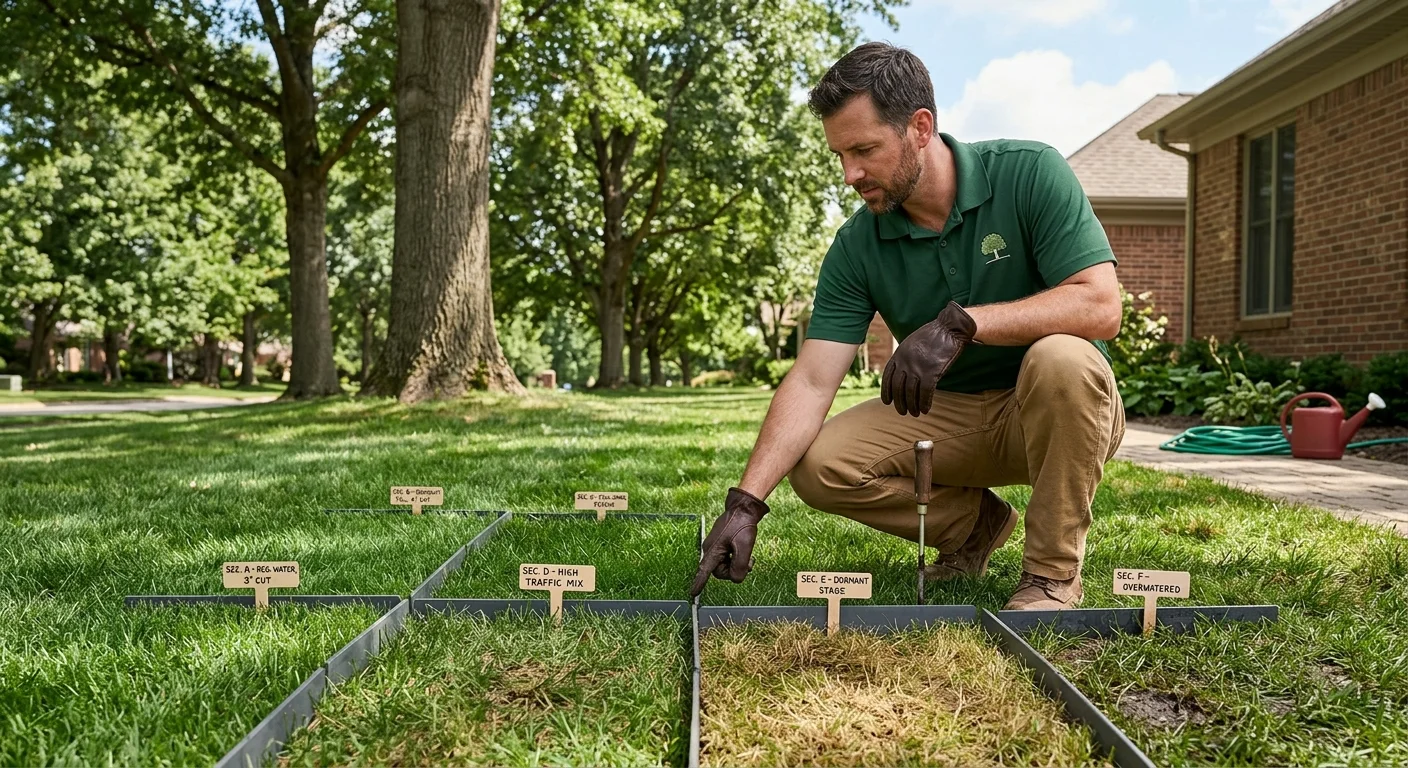
Low-maintenance lawn grass is not a trophy species. It is a workload you can keep. Four jobs decide that workload: mowing, watering, repair, and dormancy. Skip one in the sales photo and it shows up on your Saturday.
Mowing is the job you feel first. Fast growers hide a dog path, then they ask for the mower again. Slow growers stay tidy longer, then they stay thin longer after wear. UC Statewide IPM’s one-third rule still applies on an “easy” lawn. Do not take off more than one-third of the blade in a single cut. Scalping is how a low-mow pitch turns into a repair project.
Watering is the job you feel on the timer and the bill. UC Master Gardeners of San Diego County note that warm-season grasses such as bermudagrass and zoysia need 25% less water than cool-season types. That is a family-to-family comparison, not a promise that any lawn runs on rainfall. Inside the City of San Diego Public Utilities service area, potable irrigation is allowed only before 10:00 a.m. or after 6:00 p.m. Watering is banned during measurable rain and for 48 hours after. Other agencies in the county set their own clocks. Confirm yours before you pick a thirsty cool-season stand. A grass that needs less water still fails if heads mist the sidewalk. EPA WaterSense is a solid place to check efficient irrigation hardware.
Repair is the job people skip when they shop by color. A grass that shrugs off soccer and dogs will ask for more edging. A shade lawn may need patches after one summer of foot traffic. If you want the look without the weekly circuit, weekly lawn maintenance is how many households handle mowing and edging. For lots under 1,500 square feet, published local service pricing for that weekly work has run about $120 to $180 a month. That is a market range for the visit, not a Bloom Pro SD fee. The contractor you hire sets the price on your lot and confirms it before work starts.
Dormancy is the fade. Warm-season lawns rest when nights cool. They can look tan while a fescue street stays green. Cool-season lawns can hold winter color, then they ask for more summer water. Neither pattern is a defect. It is a trade you live with in January or in August.
There is no county-wide winner. Our guide to grass types for San Diego lawns compares species. This page is about the work each choice leaves on your calendar.
How do sun, shade, and foot traffic narrow the options
Full sun in East County is a different plant problem than a canyon lot in La Mesa. Bermuda wants sun and handles wear. It also sends runners into beds if edges are sloppy. St. Augustine takes more shade, the kind you get under a mature canopy in North Park or along a coastal side yard. It does not bounce back from heavy play the way a dense bermuda stand can. Zoysia sits in the middle on many lots: slower vertical growth, so less mowing for some households, and a tighter surface. Tall fescue, often sold here as Marathon-type sod, keeps a cooler-season look and can hold up in mixed sun. It is still a cool-season grass. Summer water is the tax.
Map the yard before you pick a bag or a pallet. Morning sun on a south wall in Chula Vista is not all-day inland sun in Lakeside or Ramona. A strip that only sees light after 2 p.m. will punish bermuda. A play lawn that funnels kids from the slider to the gate will punish a shade grass. Write the hours down. “Part shade” is not a spec.
Foot traffic is not “kids or no kids.” It is paths. The same grass can thrive in the open and fail on the route to the trash cans. If that path is daily, plan a walkable surface there. Stepping stones, decomposed granite, or a tough groundcover in the path keep the rest of the lawn from becoming a brown stripe.
Kikuyu shows up in older San Diego lawns because it fills fast. That fill is the maintenance. It needs containment. A low-mow pitch and an aggressive grass do not belong in the same sentence. Grass for an easy-care yard is the one that matches the wear you already have, not the wear you hope to stop.
Why do coastal and inland yards need different comparisons
San Diego County is not one climate with a city name on it. A Carlsbad parkway sits in marine layer for much of the year. An Alpine or El Cajon back fence can bake. Grass that looks easy on the coast can stall inland. Grass that loves inland heat can look tired in a cool, salty, shady Coronado or Imperial Beach lot.
Coastal north county, Encinitas, Solana Beach, Del Mar, often means milder nights, more fog, and more shade from two-story neighbors. Thin turf and fungus show up when people water like it is Ramona. Inland valleys, Escondido, Santee, Spring Valley, the El Cajon flats, mean higher summer heat and a clearer bermuda-versus-fescue fork. Warm-season color drop in winter is more obvious inland. The air is drier. The sun hits dormant blades harder.
South Bay lots in Chula Vista and National City can mix both: heat inland of the bay, marine influence closer to the water, and small yards where mower access is the real maintenance. East County clay and compacted fill around newer tracts are not a species problem first. They are a soil and drainage problem. A pretty grass on compacted dirt becomes a thin August lawn.
Water rules split too. The 10 a.m. and 6 p.m. window is a City of San Diego rule. Helix, Otay, Olivenhain, and the rest of the county’s agencies publish their own watering schedules. Match the grass to the clock you actually have to obey.
If you are replacing a lawn because you are tired of the hose, read the rebate rules before you pick a substitute. SoCal Water$mart pays $2.00 per square foot of removed turf, up to 5,000 square feet of converted yard per year. Your water agency may add more, and funding can change. Synthetic turf is not an approved conversion. Live turf left in the project, invasive plants, and impermeable hardscape also fail eligibility. Projects need approval before the old grass comes out.
How does a living lawn compare with lawn alternatives
Keep a lawn when you still need a play surface, a pet run, or an HOA turf look. Switch the species and the irrigation before you switch the whole idea. Sod installation is how most San Diego lawns get a clean species change. Seed has a place on bare soil with irrigation and time. It is not a shortcut over living weeds.
Leave a lawn when the square footage is mostly viewed, not used. Groundcovers, native and drought-tolerant planting, gravel with a real stormwater feature, and mixed beds cut mowing to the edges. They do not cut all work. Weeding in year one is the bill you pay for skipping the mower. Drought-tolerant landscaping is the path when the goal is less turf, not a different turf.
UC Master Gardeners of San Diego County note that California native plants, once established, need minimum water and little or no fertilizer. That is about natives, not a claim that a national “no-mow mix” is native here. Fine fescue no-mow blends are a cool-region product in a lot of national roundups. In a San Diego summer, a cool-season stand is often the opposite of low input.
Artificial turf is a separate product with its own cleaning and heat issues. It also knocks you out of the SoCal Water$mart turf replacement rebate. If the point of ripping grass is the rebate, do not put plastic down.
A split yard is often the honest design. Keep a small bermuda or zoysia pad where people walk. Convert the parkway, the parkway strip, and the side yard. That is usually less work than a huge “easy” lawn that is the wrong species.
What low-maintenance grass alternatives can I walk on
If you need something you can cross, stay honest about how often. A living lawn still wins for regular play. Some groundcovers take light steps once they are filled in. They are not a soccer field. Read our ground cover guide for San Diego lawn alternatives before you rip out turf you still use as a yard. Kurapia is one planted option. The grower spaces plugs 12 to 15 inches on center, and in warm weather those plugs can fill in about two months. That is establishment, not a traffic rating. Ask the contractor how the surface is used after fill-in. Do not treat a catalog photo as a playground spec.
What is poor man’s grass
Searchers use “poor man’s grass” for several plants. In some regions it means dichondra. In others it means a cheap seed mix or a weedy fill. It is not a specification you can hand a San Diego contractor. If the real wish is a cheap green carpet that you never mow, say that. Then get a straight answer about weeds, HOA rules, and whether you will still walk on it.
What should you share before requesting a contractor match
Bring facts, not a species name you liked in a photo. The licensed pro we match you with can only design around the lot you have.
Share sun by hour, not “part shade.” Note which rooms cast shadow in July. Mark the dog path, the gate, and the trash-can route. Say whether winter brown is acceptable. Name your water agency. If you are on a brushy lot, say so. Lawn next to chaparral is a different maintenance conversation than a Mira Mesa cul-de-sac. CAL FIRE defensible space talks in zones from the structure out, including a 5-foot ember-resistant zone. That can change what stays green against the house.
Say whether you want to keep turf or convert it. Rebate projects need a plant count of at least three plants per 100 square feet, a stormwater feature, permeable surfaces, and a sprinkler change to drip, micro-spray, bubblers, or rotating nozzles, or capped heads. Dead lawn and bare dirt do not qualify. Check the SoCal Water$mart estimator for your address. Amounts can change.
Can I just throw grass seed on my lawn and it will grow
Broadcasting seed over living turf is a common hope. It is a weak way to change species. Seed needs soil contact, moisture, and less competition. Existing bermuda will swallow a cool-season overseed as a winter costume, then take the lawn back. For a true change, the old stand usually has to go, the grade has to work, and irrigation has to match the new plant. Compare methods in our sod versus seed guide rather than treating a shaken bag as a renovation.
What type of grass is best for growing in poor soil
No ledger species is “the poor-soil grass” for this county. Compacted fill, salty coastal sand, and inland clay fail different plants for different reasons. A soil test tells you pH and nutrients before anyone orders pallets. See when a lawn needs a soil test. Phosphorus and potassium are not automatic. Fix drainage and compaction first. Then pick the grass that fits sun and traffic.
You can confirm a contractor’s license on the CSLB license check. The crews we send are licensed and insured. You contract with the pro directly.
When to call us
Call when you are choosing a new lawn, converting turf, or you already know the species is fighting the lot. A licensed landscaping contractor should look at sun, irrigation, and how you use the yard before anyone opens a pallet. Call us at (760) 400-6355 and we’ll match you with a licensed local pro.