UC IPM recommends watering lawns early in the morning, when evaporation and wind are minimal. Read the current UC turf guide for the clock window it publishes. Your water provider’s restrictions still control, and the lawn should be watered only when it needs moisture.
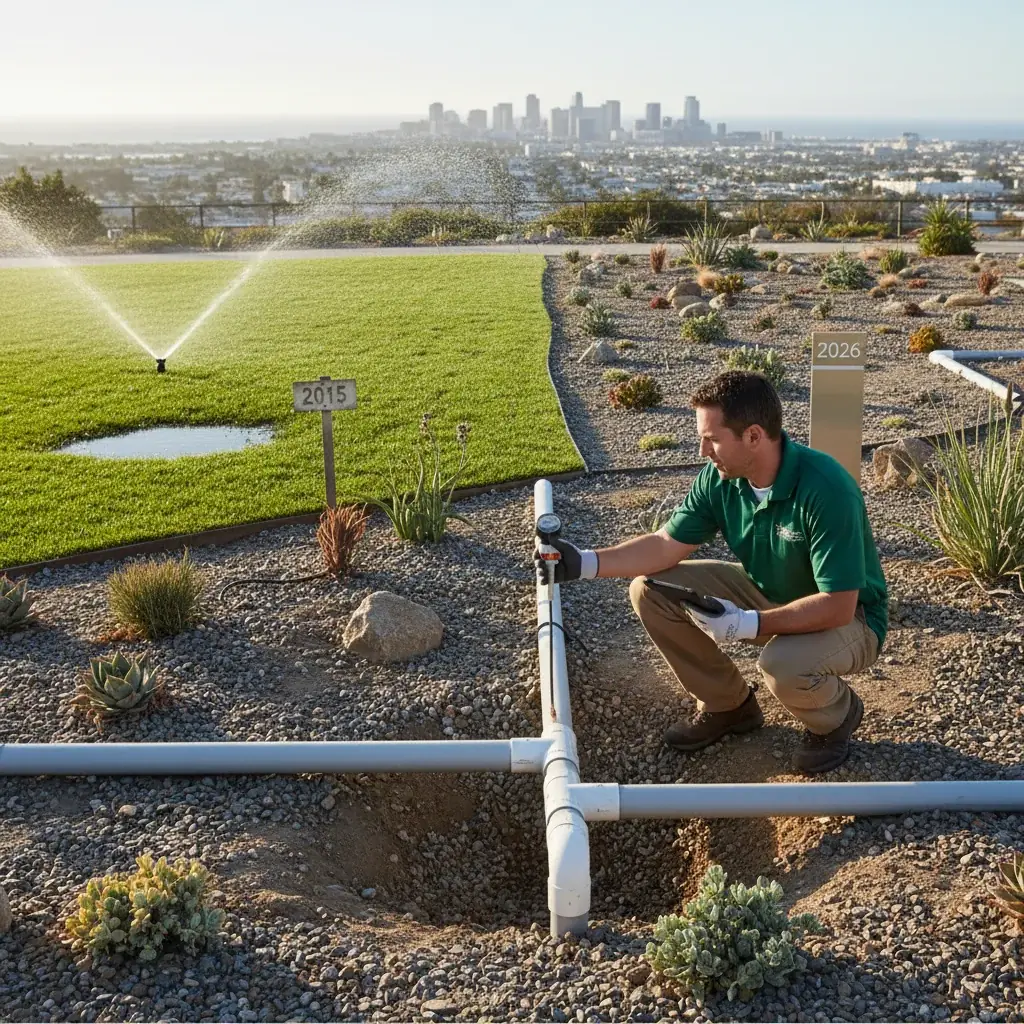
Why early morning wins
Wind is typically calmest in the early morning hours across San Diego County, which matters directly for spray irrigation. Sprinkler spray patterns drift in wind, sending water onto sidewalks, driveways, or neighboring beds instead of the lawn it was meant for. Watering before the day’s onshore breeze or afternoon gusts pick up keeps more water landing where it’s supposed to.
Evaporation rates are also lowest before sunrise and in the hour or two after, since temperatures are cooler and the sun hasn’t started pulling moisture off the leaf surface and soil. Watering in full midday sun means a meaningful share of that water evaporates before it ever soaks into the root zone, which is straightforward waste on your water bill.
Early irrigation also reduces the length of time foliage remains wet. UC advises avoiding evening or pre-midnight lawn watering because cool, wet nights can favor some diseases. See the UC IPM lawn-watering guidance for the full set of soil, runoff, and system checks.
Why evening watering is the worst option
Evening overhead watering can leave grass wet through cool nighttime hours. That does not diagnose a disease or mean one evening cycle will damage a lawn, but UC guidance makes early morning the better general choice for spray irrigation.
Evening watering also tends to happen later than planned in practice, since automated systems often get set for convenient evening hours, pushing the wet period even later into the night with even less daylight left to dry out before the next day’s dew or fog rolls in.
How coastal, inland, and hillside yards differ
Coastal yards may remain damp longer, while inland yards may dry faster, but ZIP code alone does not set the controller. Check soil moisture, grass condition, sprinkler coverage, weather, and the provider’s rules.
UC recommends adjusting lawn watering for turf species, location, month, sun or shade, and soil. Those inputs matter more than inventing separate fixed clock times for coastal and inland neighborhoods.
Hillside and canyon-lot yards need to watch runoff regardless of timing, since water applied faster than sloped soil can absorb it just runs downhill instead of soaking in. On these properties, shorter multiple cycles with time in between for absorption (cycle-and-soak watering) matters more than the specific hour of day, though early morning is still the right window to run those cycles in.
Drip irrigation changes the calculation
Everything above applies most directly to spray irrigation. Drip irrigation applies water near the soil rather than broadcasting it through the air, so wind and wet foliage are usually less important. Leaks, runoff, emitter placement, soil moisture, and plant needs still matter. Our drip irrigation conversion guide covers questions for garden-bed conversions.
Setting your controller correctly
Most modern irrigation controllers, including smart controllers like Rachio or Hydrawise, default to early morning start times or let you set a single start time per zone with the system calculating end time based on programmed run duration. If your system is still running on an old manual dial-timer set for a convenient evening hour out of habit, moving the start time earlier is a free change that meaningfully improves how much of your water actually reaches the grass. See our summer lawn watering schedule guide for how run times and frequency should shift through the year on top of getting the time of day right.
Frequently asked questions
What time should I water my lawn in San Diego? UC’s turf guide recommends an early-morning window. Follow current provider restrictions and water only when the lawn needs it.
Is it bad to water my lawn at night? UC advises against evening or pre-midnight overhead lawn watering because cool, wet nights can favor some diseases. This is timing guidance, not a diagnosis of a particular lawn problem.
Does watering time matter for drip irrigation? Less than it does for spray sprinklers. Drip delivers water directly to the soil at the root zone without wetting plant foliage or losing water to wind drift, so the fungal-disease and evaporation concerns that drive spray-watering timing mostly don’t apply.
Should coastal and inland San Diego yards water at different times? UC’s early-morning guidance applies broadly, but soil moisture, grass type, season, sun, system performance, weather, and local restrictions should determine whether and how long a zone runs.
When to call us
If your lawn is struggling despite what looks like a reasonable watering schedule, the timing might be the actual issue. Call us at (760) 400-6355 to get matched. The independent professional can inspect the irrigation and quote the work.