A front yard can look simple yet demand constant edging, spot watering, and cleanup. Low maintenance front yard landscaping starts by removing those recurring trouble points. The plan should fit your property, how you use it, and the work you’ll actually keep doing.
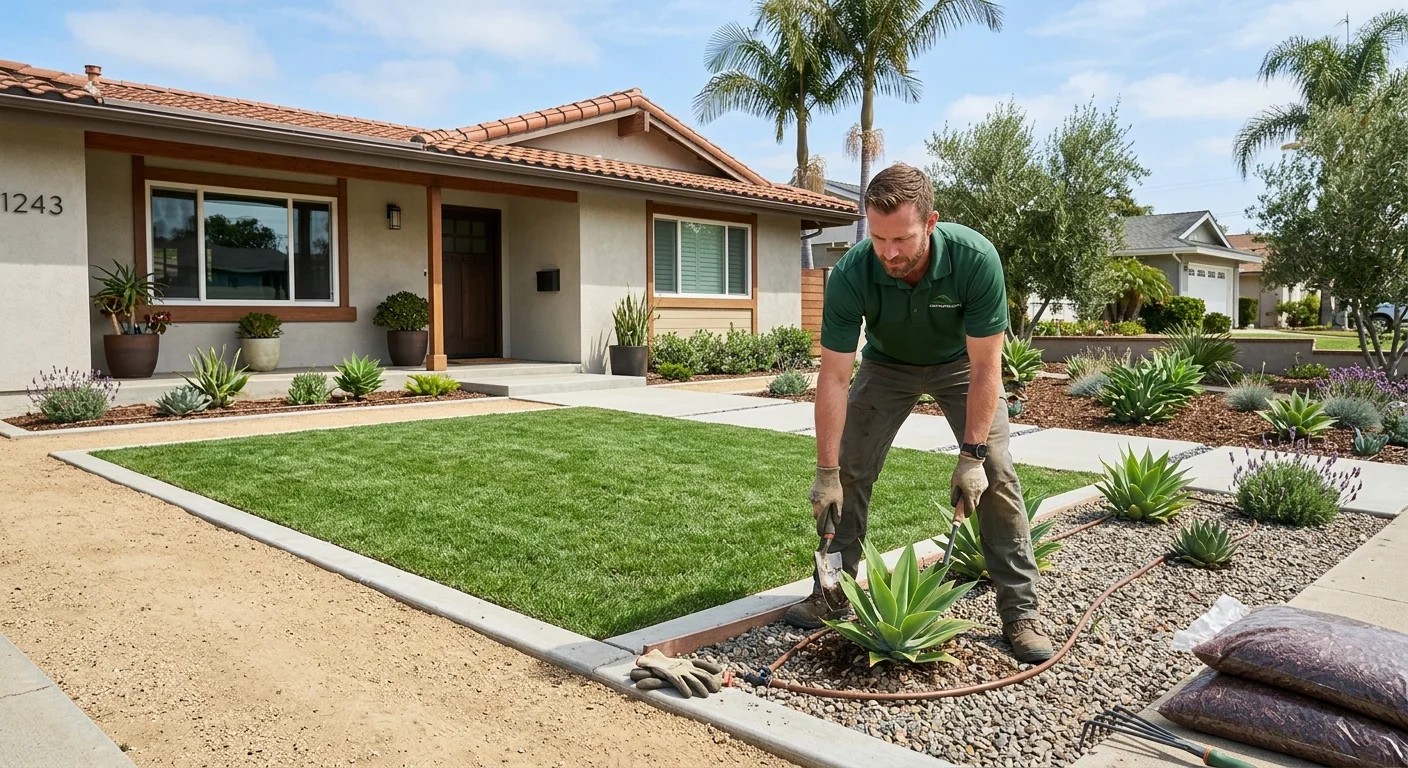
What does low maintenance mean for your yard?
Low maintenance means fewer unwanted chores, not a yard without care. Decide which tasks you want to reduce before discussing plants or materials. Otherwise, you may replace one demanding feature with another.
Walk through the front yard and list every recurring task. Include mowing, edging, pruning, hand watering, weeding, raking, and sweeping. Note where hoses must cross paths or where equipment access feels awkward. Look for irrigation overspray, bare spots, crowded shrubs, and corners that collect debris.
Next, separate necessary care from work caused by the layout. A lawn you regularly use may deserve space. A narrow grass strip that exists only between a driveway and wall deserves another look. The same applies to clipped shrubs planted where their natural size won’t fit.
Your definition should also reflect what you’ll tolerate. Some homeowners don’t mind occasional pruning but dislike weekly edging. Others want open access for bins, deliveries, or a parked car. Write those preferences down. They’re useful design instructions.
Before removing anything, compare your priorities with our broader guide to front-yard landscaping ideas in San Diego. That article helps with layout choices. This guide focuses on what those choices require after installation.
Finish with three clear goals. For example: keep the walkway open, remove difficult grass strips, and group plants by irrigation needs. Those goals give a designer something concrete to solve.
Why do Encinitas and El Cajon need different plans?
An Encinitas address and an El Cajon address shouldn’t receive a copied planting plan. The city name alone isn’t enough, either. Conditions can change between two properties in the same neighborhood.
On an Encinitas lot, record any wind, marine exposure, shade, or reflected light you observe. On an El Cajon lot, document afternoon sun, hot surfaces, sheltered corners, and drainage after irrigation. These are site observations, not assumptions about every property in either city.
Map four conditions across the yard: sunlight, wind exposure, slope, and drainage. Mark each condition by planting area. The bed beside the garage may need a different plan than the space near the sidewalk. A front slope may also need different access than a level entry bed.
Don’t infer soil conditions from a ZIP code. Ask the contractor how the soil will be evaluated before plant selection. Existing irrigation behavior matters too. Run each active zone and note where water lands, pools, or misses the intended area.
Plant choices should follow those observations. The UC Master Gardener Program of San Diego County says California native plants are adapted to local conditions and can need minimal water and little or no fertilizer. That doesn’t make every native plant suitable for every front yard.
Confirm each candidate’s mature width, height, water needs, sun exposure, and invasive status. Ask how it behaves beside pavement, windows, utility access, and neighboring property. If those details can’t be confirmed, leave the plant off the plan until they can.
For a site-specific layout, a pro offering landscape design and installation can connect those observations to planting, irrigation, access, and materials.
How can you reduce narrow lawn areas and difficult bed edges?
Keep lawn where its shape supports how you use the yard. Reconsider small islands, sharp corners, and narrow strips that make mowing or edging awkward. A cleaner lawn outline can be more useful than several disconnected patches.
Start by tracing the route a mower would take. Mark tight turns, pinched passages, and places where wheels cross planting beds. Do the same for an edger, green-waste bin, and wheelbarrow. If routine access depends on stepping through plants, revise the layout.
Don’t remove all turf by default. Decide whether each section serves recreation, pets, visual space, or another real purpose. Retain areas that earn their upkeep. Consider replacing the sections that don’t.
Possible replacements include planting beds, permeable walking areas, or a restrained mix of both. Define the border before selecting the fill material. Ask how gravel will be contained and how mulch will behave on the actual slope. Also decide how crews will reach valves, meters, gates, and planting beds.
Homeowners considering a turf conversion should check SoCal Water$mart before removing grass. Use the current estimator for your address. Local agencies may add incentives. Amounts, caps, and funding change.
Eligible projects require approval before turf removal. They also require at least three plants per 100 square feet, a stormwater feature, permeable replacement areas, and qualifying irrigation changes. Synthetic turf isn’t eligible. Use the program’s address estimator and current requirements before planning around any rebate.
A rebate-ready plan and a low-upkeep plan aren’t automatically identical. Review both goals with the contractor. Our drought-tolerant landscaping service can connect you with a local professional for that discussion.
How do you match planting and irrigation to the site?
Match each planting area to its observed conditions, then review irrigation separately. Don’t start with a countywide plant list. San Diego County properties vary too much for one list to settle every yard.
Create a short record for each bed. Note direct sun, shade, wind, drainage, slope, nearby pavement, and available planting width. Photograph the area at different points during the day. Include the irrigation outlet or sprinkler head serving it.
For every proposed plant, request the common name, botanical name, mature dimensions, water needs, and preferred exposure. Confirm whether regular shaping will be needed to keep it inside the available space. If the mature size isn’t documented, don’t rely on the nursery-container size.
Ask the designer to explain how plants will be grouped by water needs. Review whether one irrigation zone currently serves lawn, shrubs, and low-water planting together. If it does, ask how the new plan will handle those different areas.
For a qualifying SoCal Water$mart conversion, overhead spray must be converted to drip, micro-spray, bubblers, or rotating nozzles, or the heads must be capped. The correct choice still depends on the property and planting plan. Don’t select equipment only because it appears on an eligibility list.
Include irrigation components in the maintenance discussion. Ask how emitters, filters, valves, and controllers will be checked. Request a clear explanation of how the watering plan should change as plants establish. Avoid any universal schedule that ignores weather, exposure, or the water agency serving the address.
Finally, decide how much seasonal appearance you’ll accept. Flower drop, dormancy, spreading growth, and pruning preferences can affect your experience of the yard. Ask the contractor to explain those traits before installation. A planting plan is easier to maintain when its normal behavior matches your expectations.
What should you confirm before requesting a contractor match?
Prepare a short project brief before calling. Include photos, a rough yard sketch, and the three maintenance problems you most want solved. Mention any lawn you want to retain and any areas that must remain accessible.
Your brief should answer these points:
- Which recurring tasks are you trying to reduce?
- Which existing plants or features must stay?
- Where do people, pets, bins, and equipment move?
- Which irrigation zones currently serve the front yard?
- Are you considering a turf-replacement rebate?
- Do you have property, community, or utility restrictions to confirm?
- Will the plan change grading, drainage, walls, lighting, or irrigation?
Ask the contractor to identify any assumptions in the proposed plan. Plant names, mature sizes, irrigation changes, material placement, and access routes should be clear. If a detail hasn’t been confirmed, it should remain an open item.
Permit requirements depend on the project and jurisdiction. Don’t assume that a small-looking wall or drainage change needs no review. For example, City of San Diego retaining-wall rules consider more than visible wall height. Backfill slope, added loads, and tiered configurations can also matter. The matched contractor should confirm the applicable requirements with the local authority.
Bloom Pro SD doesn’t perform landscaping work or set contractor prices. We collect your project details and match you with a licensed, independent local professional. You’ll contract with and pay that professional directly. The contractor should confirm the scope and price before work begins.
You can also check a contractor through the official CSLB license lookup. Review the license status, classification, expiration date, bond status, workers’ compensation information, and any listed disciplinary actions.
Once work is complete, use a monthly San Diego landscape maintenance checklist to track the tasks your new layout still needs.
When to call us
Call when your low-maintenance plan involves a full planting redesign, irrigation changes, drainage work, grading, or retaining walls. Those decisions benefit from a licensed landscaping professional who can evaluate the actual property. Call us at (760) 400-6355 and we’ll match you with a licensed local pro.