A narrow side yard leaves little room for the wrong hedge. The right choice must provide the intended screen without swallowing the path, blocking a gate, or crowding the house.
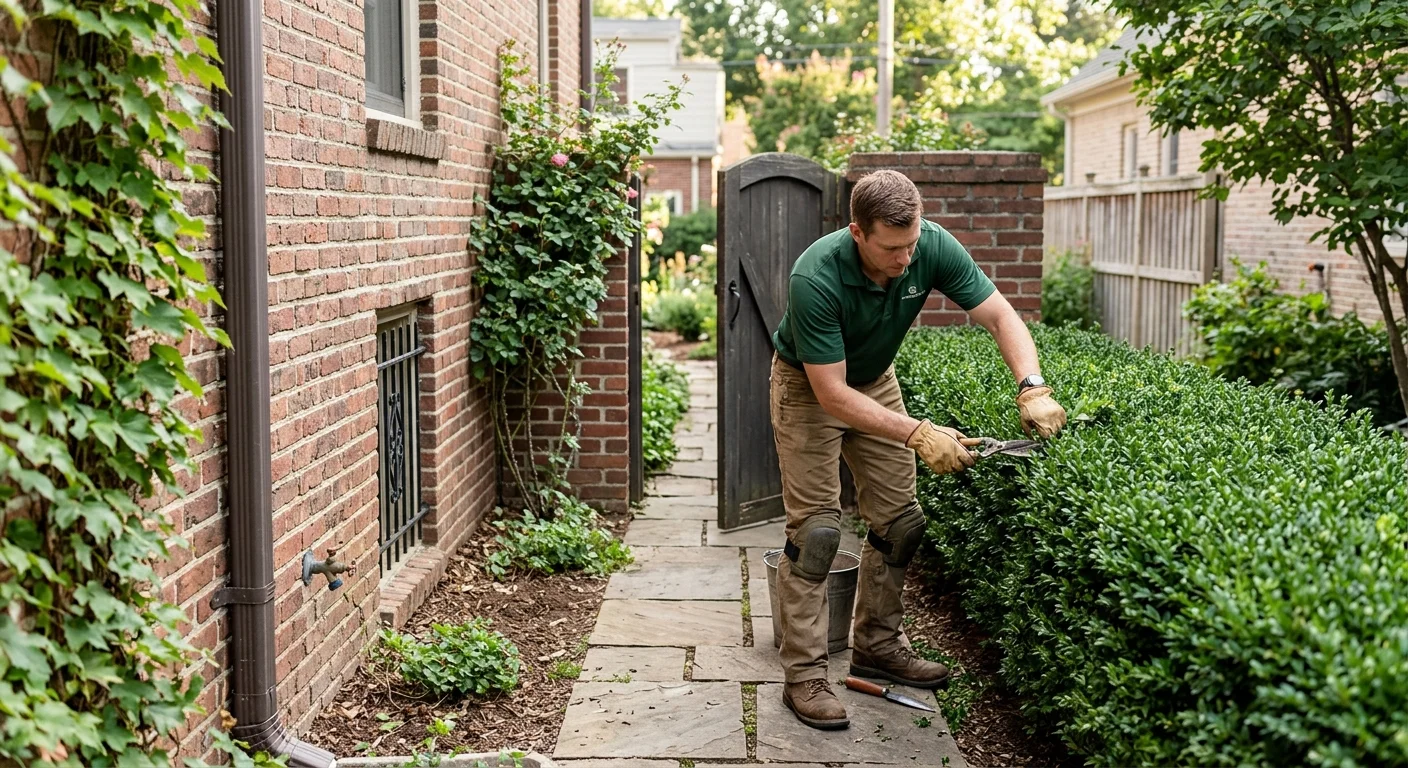
How do you start with the space available at mature size?
Measure the usable planting strip before comparing hedge plants. Start at the house wall and measure toward the fence or property edge. Then subtract the space needed for walking, opening gates, moving bins, and reaching utilities.
Record the narrowest point, not just the average width. Downspouts, hose bibs, utility boxes, steps, and fence posts can reduce clearance. One tight spot may determine whether a hedge works across the entire run.
Next, ask for the documented mature width of each candidate plant. Bloom Pro SD’s approved sources don’t confirm mature dimensions for individual hedge species. Check the current nursery label, the grower’s published specifications, or the UC Master Gardener Program of San Diego County before choosing one.
Don’t treat frequent shearing as a substitute for suitable width. A plant that naturally wants more room can become a constant trimming project. It may also push growth through fences or across the walking surface between service visits.
Mark the proposed hedge centerline with string or removable tape. Measure outward on both sides using the documented mature width. This simple layout shows whether the plant would crowd the wall, fence, or path.
Also look above the planting strip. Eaves, windows, meters, lights, and neighboring branches affect the available space. Include them in the plan before installation.
For a general comparison of screening options, read our guide to privacy hedges in San Diego. Use that guide to define the desired screen, then return to actual side-yard measurements before selecting a plant.
How do you match light, irrigation, and soil to the planting area?
A side yard can contain several planting conditions within one short run. A wall may shade the soil while the hedge top receives stronger light. Reflected heat can also affect one side more than the other.
Observe the strip at several points during the day. Note where direct light reaches the soil and where the wall remains shaded. Don’t classify the entire side yard from one quick visit.
Next, inspect how water reaches the bed. Identify spray heads, drip lines, capped outlets, and low areas where water collects. Look for irrigation reaching the wall, walkway, or fence instead of the root area. An irrigation contractor can evaluate equipment when the existing layout doesn’t suit the proposed hedge.
Inside the City of San Diego Public Utilities service area, potable landscape watering is allowed only before 10:00 a.m. or after 6:00 p.m. Watering is also prohibited during measurable rain and for 48 hours afterward. Properties served by other agencies may have different restrictions, so confirm the current rules with the property’s water provider.
Soil conditions also require an on-site check. Compaction, drainage, buried construction material, and existing roots can change within the same bed. Don’t claim a plant is suitable until its documented needs are compared with the actual planting area.
California native plants are adapted to local conditions and generally need minimum water and little or no fertilizer. They also support native birds, butterflies, beneficial insects, and other wildlife. That doesn’t make every native plant suitable for every narrow strip. Mature width, light, access, and documented plant traits still control the decision.
If irrigation needs adjustment, the contractor can explain the work separately. EPA WaterSense also provides guidance about efficient irrigation.
How should you plan around gates, paths, and service access?
The hedge must work with the side yard’s daily traffic. Walk the route carrying the widest item normally moved through it. That might be a trash cart, bicycle, ladder, wheelbarrow, or outdoor furniture.
Open every gate fully. Check which direction it swings and where the latch sits. Keep the hedge plan outside that operating area. New growth shouldn’t cover the latch or force someone against the wall while entering.
Map access points before digging. Mark meters, utility panels, hose connections, cleanouts, irrigation valves, downspouts, and exterior equipment. The exact clearance required around any regulated equipment wasn’t confirmed in the approved claims ledger. Ask the relevant utility, agency, equipment manufacturer, or qualified contractor before planting nearby.
Drainage also belongs on the access plan. Don’t block a visible drain or direct routine irrigation toward the foundation. If water already collects beside the house, have the condition assessed before adding plants or modifying grade.
Think about future maintenance space. A person may need safe footing beside the hedge for pruning and cleanup. If the only workable position is inside a planting bed or against the wall, the design needs another pass.
Your final sketch should show the hedge at documented mature width. Add the open gate, usable path, service points, and maintenance position. That drawing gives a landscape design professional something specific to review.
If the corridor can’t support both a hedge and dependable access, don’t force the layout. A shorter planted section or another screening approach may protect the path better. The selection should follow the space rather than the other way around.
How do privacy, flowering, and formal hedge goals differ?
Choose the job first, then compare plants. “Hedge” can mean a privacy screen, a flowering border, a clipped architectural line, or a loose green edge. Those goals lead to different maintenance and spacing decisions.
For privacy, decide exactly what needs screening. A neighboring window may require height in one limited area. A low fence may need coverage across a longer run. Don’t assume the tallest option is automatically the best one.
A formal hedge needs a clear finished outline. Discuss the intended height, face, and top before planting. The available maintenance access matters because repeated shaping must happen without blocking the path or damaging nearby surfaces.
A flowering hedge changes the selection questions. Ask when it blooms, how flowers and fruit affect cleanup, and whether it attracts wildlife near a gate or busy walkway. Our guide to flowering shrubs for San Diego can help define the look. Verify every candidate’s mature size and site requirements with a current authoritative source.
Root behavior, toxicity, and invasive status also need plant-specific confirmation. Those details aren’t verified for individual hedge species in Bloom Pro SD’s approved claims ledger. Ask the nursery or contractor for the botanical name, then confirm those traits through current university, government, or grower documentation.
Consider who uses the path. Tell the contractor if children or pets have access to the area. Share any concerns about thorns, irritating sap, fruit, or fallen material. Don’t rely only on a common plant name, since labels can be incomplete or ambiguous.
Finally, decide how much change you’ll accept over time. A flowering screen and a tightly clipped hedge won’t create the same appearance. Pick one clear priority and let that guide the plant search.
What should you confirm with a landscape contractor?
Bring measurements, photos, and a simple access sketch to the consultation. Explain the required path width, gate movement, screening target, and maintenance preference. Point out irrigation components, drainage concerns, and service equipment.
Ask the contractor to identify each proposed hedge plant by botanical name. Request current documentation for mature width, mature height, light needs, irrigation needs, root behavior, toxicity, and invasive status. If a detail can’t be confirmed, don’t treat it as settled.
Walk through these questions with the contractor:
- Will the documented mature width fit without reducing needed access?
- Can the gate open fully after the hedge fills in?
- How will crews reach both sides for future pruning?
- Does the existing irrigation suit the proposed planting area?
- Are drainage or soil problems visible before installation?
- Could roots conflict with nearby paving, walls, or utilities?
- Is the plant documented as toxic or invasive?
- What finished height and shape will the maintenance plan preserve?
The contractor should also explain how the hedge will be spaced from buildings, fences, and equipment. Any required utility or regulated clearances should come from the responsible authority, not an estimate.
Ask who will handle ongoing shaping. Hedge and shrub trimming may be needed to preserve the planned width and keep gates, paths, and service points open. The contractor confirms the scope and price with you before work starts.
You can also verify a California contractor through the CSLB license lookup. Bloom Pro SD is a referral service. We match homeowners with licensed, independent local landscaping professionals, while the homeowner contracts with and pays the professional directly.
When to call us
Call when the planting strip has tight access, existing irrigation, drainage concerns, or nearby utilities. A licensed landscaping pro can assess the site and compare documented plant requirements with the available space. Call us at (760) 400-6355 and we’ll match you with a licensed local pro.