A hard, compacted lawn doesn’t respond to more water or more fertilizer. It responds to aeration, and only if the service actually opens the soil the way it’s supposed to. Before you hire anyone, it helps to know what a real aeration visit covers and what it can’t fix on its own.
What core aeration is meant to change
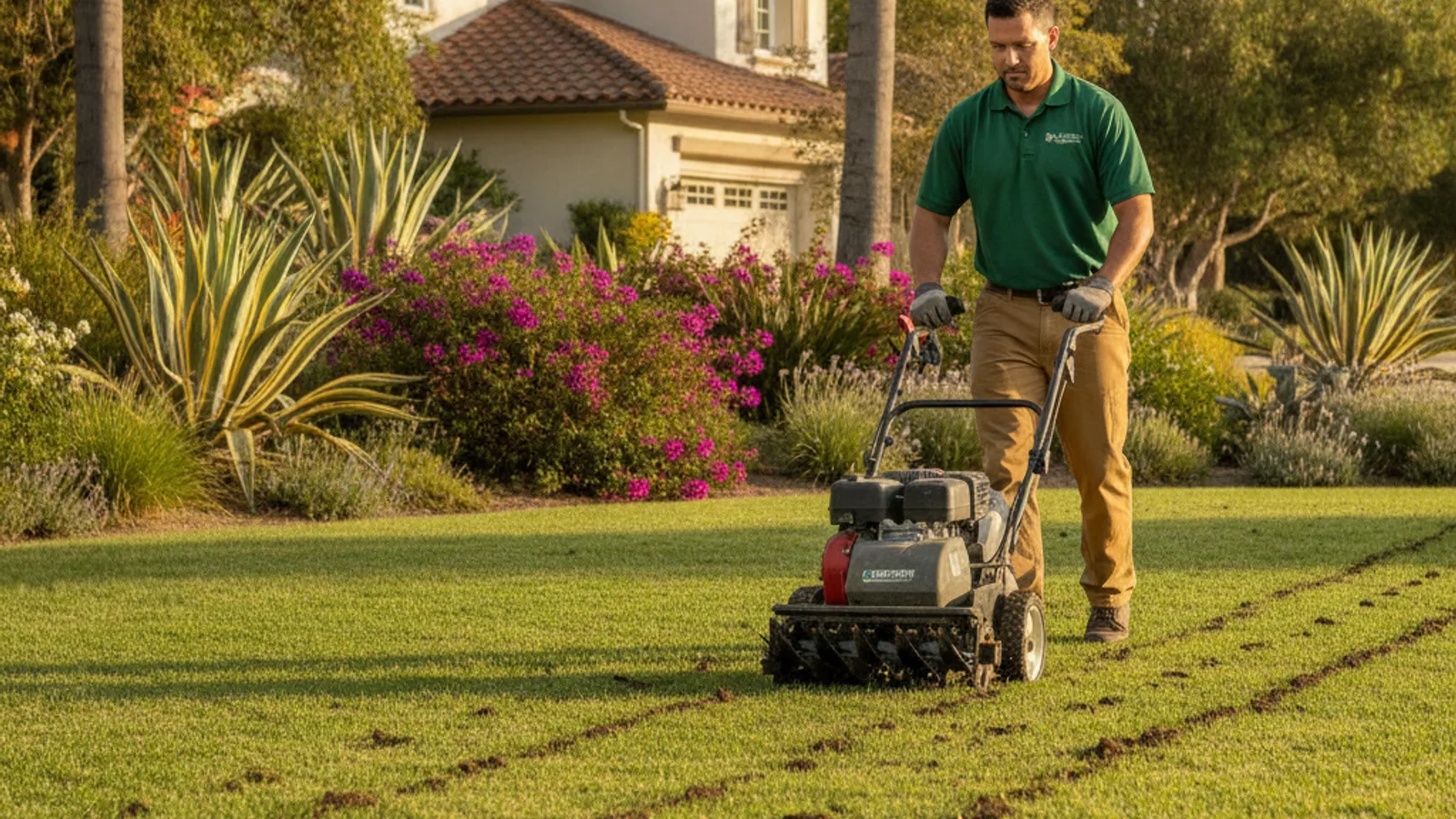
Core aeration pulls small plugs of soil and thatch out of the lawn and leaves them on the surface to break down. The goal is simple: reduce compaction so air, water, and nutrients can move down to the root zone instead of running off the top.
Compaction builds up from foot traffic, parked vehicles, kids and dogs using the same paths, and San Diego’s clay-heavy soils in many inland neighborhoods. Clay compacts harder than sandy soil and holds that compaction longer, which is one reason inland lawns often need the service more than a coastal yard on looser soil.
A single aeration pass won’t rebuild a lawn that’s been neglected for years. It’s one input in a larger routine that usually includes mowing height, watering schedule, and fertility. What it does reliably do is give roots room to grow deeper, which is the foundation everything else depends on.
Don’t expect the contractor to hand you a soil compaction number or a guaranteed before-and-after result. Soil condition varies by yard, and a licensed pro should describe what they see on your property rather than quote a generic outcome.
Which lawn symptoms deserve a closer look
Not every rough patch means the lawn needs aeration. A few signs are worth mentioning when you call for a quote, because they help the contractor scope the visit correctly.
Water pooling on the surface instead of soaking in is one of the clearest signals. So is a lawn that stays hard underfoot even a day or two after watering. If you can’t push a screwdriver a few inches into moist soil without real resistance, compaction is likely part of the story.
Thinning turf in high-traffic paths, a lawn that dries out faster than the rest of the yard even on the same watering schedule, and grass that looks stressed despite a normal irrigation routine are also worth flagging. None of these symptoms confirm compaction on their own. They’re reasons to ask a pro to look at the soil, not a diagnosis you can make from the driveway.
Brown patches, active disease, grub damage, and irrigation coverage gaps can look similar to compaction stress from a distance but need a different fix. Naming what you’re actually seeing, rather than just saying “the lawn looks bad,” gets you a more accurate scope.
Age of the lawn matters too. A newer sod install rarely needs aeration in its first year or two, since the soil underneath usually hasn’t had time to compact under regular foot traffic yet. An older, established lawn that’s been walked on the same way for a decade is a much more likely candidate. If your yard was recently graded, regraded, or had heavy equipment on it during a remodel, that’s also worth mentioning, since construction traffic compacts soil faster than normal use.
How aeration differs from dethatching and overseeding
These three services get bundled together often enough that homeowners assume they’re the same job. They’re not, and mixing them up in a request can lead to the wrong quote.
Aeration addresses the soil. Dethatching addresses a different layer entirely: the mat of dead grass, roots, and debris sitting between the soil and the green blades. A thick thatch layer blocks water the same way compaction does, but the fix is a different tool and a different pass. Our guide to dethatching a San Diego lawn covers how to tell which problem you actually have.
Overseeding is a separate step again: introducing new seed into an existing lawn, usually right after aeration because the holes left behind give seed direct soil contact instead of getting stranded on top of dense turf. Timing matters more here than with almost any other lawn service in this county, since San Diego runs cool-season and warm-season grasses on opposite calendars. Our month-by-month aeration and overseeding timing guide breaks that down by grass type.
A lawn can need one of these services, two of them together, or all three in sequence. The scope should say which ones are actually included rather than lumping them under a single “lawn renovation” line.
What the contractor’s scope should state
A written scope for an aeration visit should name the equipment (core aeration, which pulls physical plugs, versus spike or liquid methods, which don’t remove material the same way), the areas of turf included, and the number of passes over the lawn. A single direction pass and a cross-hatch pattern in two directions are different levels of work, and the scope should say which one you’re getting.
It should also state whether the plugs stay on the lawn to break down naturally or get collected and hauled off. Leaving them is standard practice and adds a small amount of organic matter back to the soil. If a quote says debris removal is included, ask whether that refers to aeration plugs specifically or general yard debris.
Ask what happens if the contractor hits an unmarked irrigation line, valve box, or root during the pass, since aeration tines go a few inches into the ground and those are the most common surprises. A scope that names how that gets handled, rather than staying silent on it, is a better sign than one that doesn’t mention it at all.
Watering after the visit is another item worth confirming. Freshly aerated soil generally benefits from watering in the days that follow, since the holes give moisture a direct path to the root zone instead of running off. If you’re in a jurisdiction with fixed watering days or time windows, that schedule doesn’t change just because you had work done, so confirm the timing fits your area’s restrictions rather than assuming an exception applies.
We don’t set that scope or the price behind it. The independent, licensed lawn fertilization and turf-care pros in our network confirm the exact work and the price with you directly before anything starts, based on your lot size, soil condition, and what the visit needs to cover.
What to share before we match you with a pro
The details you give us up front shape which contractor we match you with and how accurate the quote ends up being. Start with your city, since soil type and grass variety both shift across San Diego County’s coastal, inland, and East County microclimates.
Tell us your lawn’s approximate square footage and whether any part of it is fenced, sloped, or hard to access with equipment. Mention your grass type if you know it. Fescue, bermuda, and kikuyu respond to aeration and overseeding on different calendars, and a pro who knows which one you have can time the visit correctly.
Describe what you’re actually seeing rather than a general complaint:
- Where water pools or runs off instead of soaking in
- Which areas feel hardest underfoot
- Whether you want overseeding done at the same visit
- Any known irrigation lines, valve boxes, or buried utilities in the lawn
- Pets or kids using the yard regularly
- Whether you’ve had aeration done before and when
If your area participates in rebate programs for water-efficient landscaping upgrades, SoCal Water$mart lists current offers, though those programs are separate from aeration itself and aren’t something we administer. For general guidance on lawn and soil health, the UC Master Gardener Program of San Diego County is a neutral resource worth checking. You can also confirm any contractor’s license status through the CSLB license lookup before work begins.
When to call us
Call when your lawn stays hard after watering, water pools instead of soaking in, or you’re planning to overseed and want the soil ready first. Call us at (760) 400-6355 and we’ll match you with a licensed local pro.