A stone border can give a planting bed a clear, substantial edge. The harder decision is choosing a layout that fits the yard, irrigation, slope, and nearby hardscape.
Where does stone edging help in a San Diego yard?
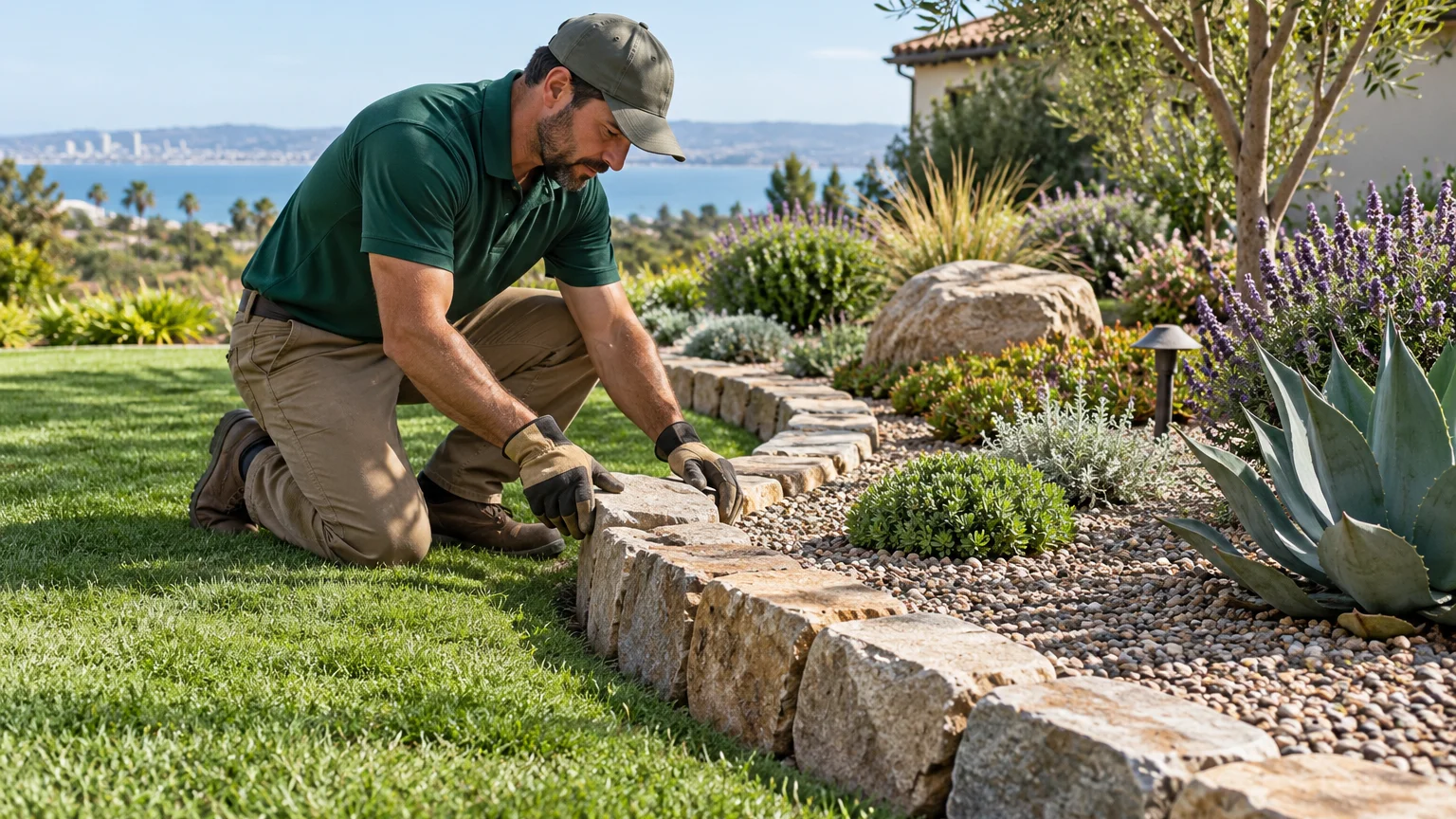
Stone landscape edging works best where the border should remain visually prominent. It can frame a front planting bed, separate lawn from gravel, or define a path through a larger yard. The stone becomes part of the design instead of disappearing into it.
Start by deciding what the edge must separate. A lawn beside loose rock presents a different design problem than mulch beside a walkway. A curved succulent bed also needs a different layout than a straight property-side planting strip.
Stone garden edging may fit these areas:
- Front beds where the border contributes to curb appeal
- Lawn edges that need a clearly defined mowing line
- Gravel areas beside planted beds
- Dry creek or rain garden transitions
- Paths that need a visible boundary
- Planting pockets within a larger hardscape plan
San Diego County yards vary widely. A compact bed in City Heights may call for a narrow edge. A larger Poway or Lakeside lot may have longer runs, elevation changes, and irrigation crossings. Coastal homeowners in Coronado or Encinitas may also want the contractor to address exposure conditions in the product selection. No verified stone-specific salt-air performance figures are available in the approved claims ledger, so ask for the selected product’s written specifications.
The edge should also relate to nearby materials. Compare its color, surface, and scale with the home, paving, gravel, and retaining walls. Our guide to landscape edging ideas that last can help you organize those design choices before discussing products.
Avoid selecting stone from a close-up photo alone. Ask to see its dimensions, color range, joint style, and planned height in context. A small sample placed beside the lawn or bed can reveal whether the border looks balanced.
How does stone differ from brick, metal, and plastic?
Stone has a heavier visual presence than most edging materials. Individual pieces may show natural variation, while manufactured units may appear more regular. Neither look is automatically better. The right choice depends on the home and the surrounding landscape.
Brick creates a repeated pattern. It often suits borders where consistent shape and spacing matter. Read the landscape brick border guide if you’re comparing a modular layout with a more varied stone edge.
Metal creates a thinner visual line. It can suit a yard where plants, lawn, or gravel should receive more attention than the border. Our metal landscape edging guide covers the questions to ask about profiles, corners, and exposed edges.
Plastic can also create a restrained border. Product shape, visibility, anchoring, and intended use should appear in the contractor’s scope. Don’t treat every plastic, metal, brick, or stone product as interchangeable.
For stone, compare these details:
- Natural or manufactured appearance
- Individual pieces or connected units
- Straight, curved, or stepped layout
- Visible joints and joint width
- Finished height beside each surface
- Color variation across the full order
- Treatment at corners and endpoints
- Transitions into paving or walls
There are no approved figures for stone edging prices, service life, maintenance intervals, or warranties. That means a responsible comparison can’t promise that one material always costs less or lasts longer. Ask each contractor to identify the exact product and confirm the price before work starts. Any warranty should come from the contractor or manufacturer in writing, not from Bloom Pro SD.
Stone choice also affects the rest of the material palette. If the yard already contains loose rock, compare the edge against both gravel size and color. The pea gravel versus river rock guide offers another way to evaluate those pairings.
What do soil movement, irrigation, and slopes change?
The visible stones are only one part of the scope. Existing grade, irrigation, roots, and nearby surfaces can change how the contractor plans the border.
Ask the contractor to inspect the entire route. Mark sprinkler heads, drip lines, valve boxes, drains, lighting cable, and roots before approving the layout. The written scope should explain what happens when the proposed edge crosses one of those features.
Sloped yards need closer review. An elevation change of 2.3 feet causes a 1 psi pressure change in a drip line. Pressure-compensating drip products can reduce the effect of pressure differences, but the selected product still needs to match the system. Water left in drip lines can also drain toward the low end after irrigation stops and saturate that area.
Those irrigation conditions don’t prove that a particular edging design will fail. They do show why a contractor should consider the border and irrigation together. For broader irrigation efficiency information, homeowners can review EPA WaterSense guidance.
Ask the contractor to confirm:
- Whether irrigation lines cross the proposed edge
- Whether any heads or emitters need relocation
- How low points will be treated
- Whether the edge changes runoff paths
- How the border meets drains and paved areas
- Whether roots affect the proposed route
- Who restores disturbed lawn, gravel, or planting areas
The City of San Diego defines grading as earthwork involving grubbing, excavation, embanking, or filling. Grubbing includes removing vegetation by disturbing roots or the soil surface. A basic border isn’t automatically a major grading project, but a scope involving meaningful excavation, fill, or drainage changes deserves further review.
Permit triggers depend on the work and jurisdiction. Within the City of San Diego, selected grading triggers include certain slopes, larger elevation changes, work covering more than one acre, and changes that adversely affect drainage onto adjacent properties. Sensitive locations can add other requirements. The contractor should check the live rules for the address before changing grade.
Stone edging shouldn’t be presented as a cure for an unresolved slope or drainage problem. If water collects, soil moves, or runoff reaches a neighboring property, address that larger condition first.
When does edging become part of a larger hardscape job?
A low border can be a defined edging project. It becomes a broader hardscape job when it connects to structural walls, substantial grade changes, paving, drainage work, or loaded areas.
The distinction matters because landscape edging and retaining walls serve different purposes. A decorative border shouldn’t quietly turn into a wall holding back a meaningful soil load. If the design holds a slope, supports a walkway, or sits below a driveway or fence, ask the contractor to classify the work clearly.
Within the City of San Diego, a retaining-wall building permit is required when any listed condition applies. These include a wall over 3 feet high, measured from the top of the footing to its highest point. A permit is also required when the wall supports backfill steeper than 1.5 horizontal to 1 vertical, supports surcharge, or meets other listed conditions.
Surcharge can include loads from driveways, walkways, structure footings, and fences. A wall below the stated height isn’t automatically exempt when another trigger applies.
Different rules apply outside the City of San Diego. In unincorporated county areas, retaining walls generally require a permit unless they’re less than 3 feet high and don’t support surcharge. Other incorporated cities set and administer their own requirements.
If the stone edge connects with a patio, retaining wall, steps, or wider grading work, discuss it as one coordinated scope. Our retaining walls and hardscaping service page explains how we match homeowners with independent local contractors for this type of project.
Ask which office governs the property before relying on a threshold. City residents can contact their city’s building or development department. Owners in unincorporated areas should check with San Diego County Planning & Development Services. The live rule for the address controls.
The matched contractor, not Bloom Pro SD, should identify applicable permits and state who will handle them. Don’t accept a vague statement that a permit is unnecessary when the scope includes a wall, surcharge, drainage change, or significant grading.
What should a contractor’s written scope confirm?
A useful scope names the product and describes the completed border. “Install stone edging” leaves too many choices unresolved.
The document should identify the stone or manufactured unit by product name when available. It should also describe the planned route, approximate extent, layout, finished height, and treatment at endpoints. If natural variation is expected, ask how the contractor will handle the color and size range.
The scope should confirm:
- Which existing materials will be removed
- Where the new edge starts and stops
- Whether the layout is straight, curved, or stepped
- The selected stone or edging product
- How corners and transitions will look
- What preparation is included
- How irrigation conflicts will be handled
- Whether drainage or grade will change
- Who removes excess soil and debris
- Who restores adjacent lawn, gravel, or beds
- Whether permits or approvals apply
- What written product or workmanship terms apply
- The contractor’s confirmed price and payment terms
Photos or a simple marked plan can reduce confusion. Pay special attention to gates, utility boxes, downspouts, path crossings, and narrow side yards. These are common places for an otherwise clear border to need a specific transition.
If the property belongs to an HOA, confirm whether the proposed stone, color, or front-yard change needs approval. The approved claims ledger doesn’t establish a universal HOA process, so check the property’s current documents directly.
Verify the contractor through the California Contractors State License Board lookup. The official search can be used with a license number, business name, or personnel name. The homeowner contracts with and pays the independent contractor directly.
Bloom Pro SD doesn’t set the contractor’s price, perform the installation, or provide a warranty. We take the project details and match homeowners with licensed, independent local landscaping professionals. The contractor confirms the scope, price, schedule, and written terms with you.
When to call us
Call when stone edging intersects with irrigation, grading, drainage, slopes, or a larger hardscape plan. A licensed landscaping pro can review the property and prepare a written project scope.
Call us at (760) 400-6355 and we’ll match you with a licensed local pro.