Before San Diego’s first winter rain, clear loose debris from visible drainage paths. Then document low spots, slopes, and anything that looks beyond routine cleanup. Good preparation gives a contractor a clear starting scope without guessing at drainage repairs.
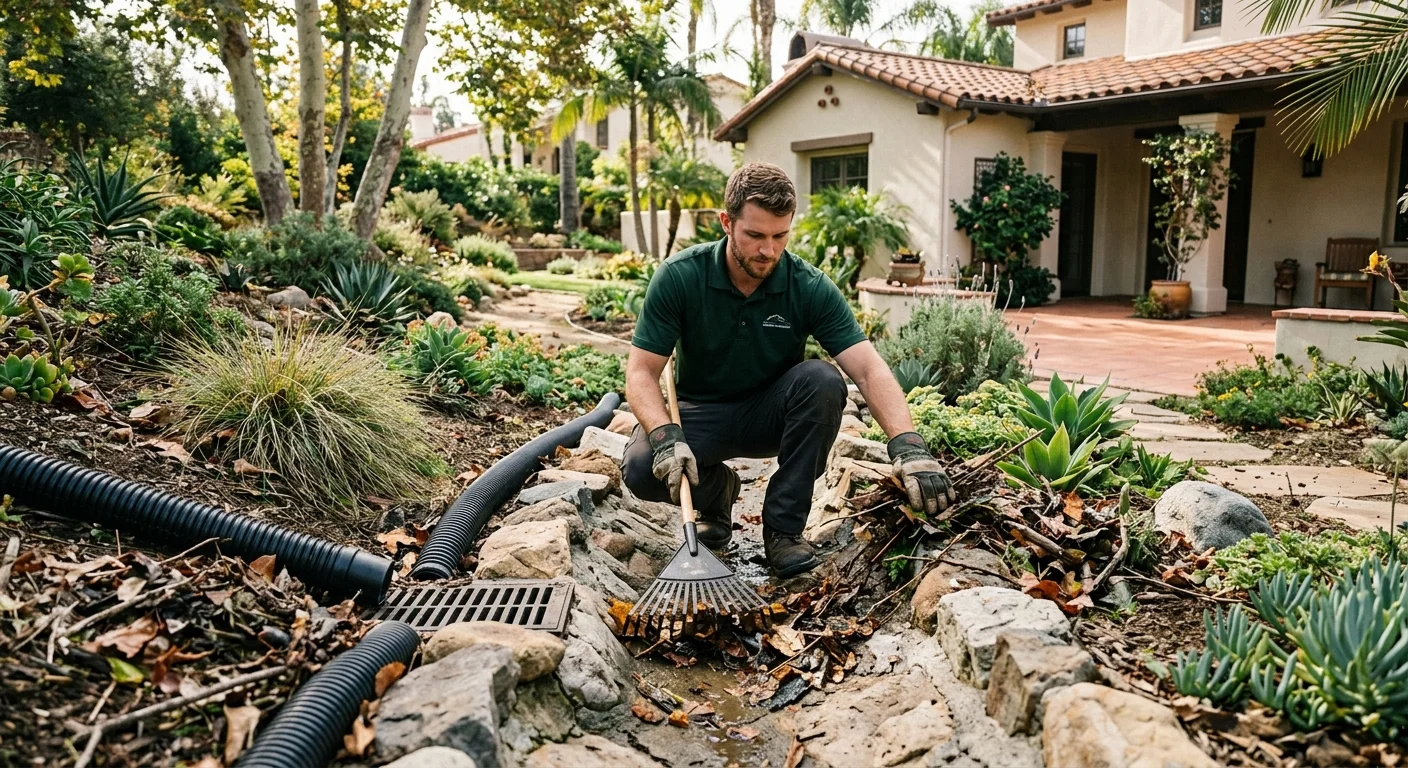
Clear debris that can block drainage paths
Start with the routes you can see from ground level. Look for surface drains, open channels, swales, curb outlets, and gaps beneath gates. Remove loose leaves, fallen flowers, twigs, weeds, and clipped plant material sitting across those paths.
This stage is about access and visibility. It doesn’t confirm that a drain works or that the yard has the right grade. It simply exposes the areas a contractor may need to assess.
Work outward from each visible opening. Check nearby planting beds, decorative rock, patio edges, and narrow side yards. Loose material often gathers where two surfaces meet. Bag or stage it instead of moving it into the street or gutter.
Don’t open buried piping or take apart a drain during basic cleanup. Photograph anything you can’t clear without digging or removing hardscape. The contractor can then separate surface cleanup from another type of work.
San Diego yards need property-specific attention. An Encinitas coastal lot, a La Mesa hillside, and a Chula Vista home with alley access won’t produce the same work order. Note where debris sits and how the crew can reach it.
This rainy-season pass also differs from a wind-focused cleanup. Use the fall seasonal cleanup checklist when Santa Ana debris, dry plant material, and general fall tasks are the main concerns. For wet-weather preparation, keep the first walkthrough centered on visible water paths and low areas.
Separate routine cleanup from drainage repairs
Routine cleanup removes loose material without changing the yard’s grade or buried system. That may include collecting leaves, cutting back manageable growth, clearing accessible drain covers, and hauling approved debris. The independent contractor defines the exact tasks before work begins.
Drainage work starts when the scope may require excavation, grading, pipe access, hardscape changes, or new drainage components. Don’t bury that work inside a vague request for “yard cleanup.” A contractor needs to assess it separately.
Several observations deserve their own photos and notes:
- Water remaining in one area after earlier rain
- Soil or mulch gathered downhill from a bed
- A drain opening that stays covered after surface debris is removed
- Cracks, movement, or separation near hardscape
- Water marks beside a wall, gate, or patio edge
- An outlet with no visible discharge during prior rain
These observations don’t identify a cause. They help the contractor decide what must be examined. Our guide to yard drainage problems in San Diego explains how to organize those signs without treating every wet patch as the same problem.
Ask for separate descriptions when the job includes both cleanup and drainage changes. The cleanup portion should name the debris and areas included. The drainage portion should identify what the contractor still needs to assess.
No universal drainage rule for every San Diego County property was confirmed in the approved record for this page. Requirements can depend on the property and its jurisdiction. Ask the contractor which local authority governs the proposed work before approving changes.
Check slopes, beds, and hardscape low spots
Walk the property in a fixed order so nothing gets skipped. Begin near the home, continue through side yards, and finish at the street, alley, or rear boundary. Record what you see without trying to diagnose it.
On slopes, look for loose surface debris and visible changes since the last rain. Photograph exposed areas, collected mulch, and plant material resting against drains or edging. Note whether the area is easy to reach with hand tools or requires work beyond routine cleanup.
In planting beds, uncover visible drain grates and channel edges. Keep existing plants, irrigation parts, and landscape fabric in view. If removing debris would disturb those items, leave the area for the contractor’s walkthrough.
Hardscape deserves a slow pass. Check patio edges, walkways, driveway joints, steps, and transitions between concrete, pavers, gravel, and soil. Mark each low spot where you’ve previously noticed water. A photo taken from several feet away often shows the surrounding grade better than a close-up.
If a visible route appears to end near a neighboring parcel, sidewalk, alley, or street, flag it for the contractor. Don’t assume where water should be redirected. That decision may involve conditions beyond the cleanup itself.
Irrigation settings also need local context. Within the City of San Diego Public Utilities service area, potable landscape watering is allowed only before 10 a.m. or after 6 p.m. It’s also prohibited during and within 48 hours after measurable rainfall. The City’s current water-use restrictions apply only within that service area. Check with your own water agency if another provider serves the address.
Confirm access and debris handling in writing
A useful cleanup scope says where the contractor can enter and what leaves the property. It also identifies any work that remains undecided.
Start with access. Give the contractor the gate location, parking constraints, steps, narrow passages, and locked areas. Mention pets, tenant coordination, or shared access before the visit. If a trailer or larger equipment won’t fit, the contractor needs that detail while defining the job.
Next, list the debris by type. Separate leaves and plant clippings from soil, rock, broken planters, lumber, or construction material. Don’t assume every item belongs in the same load. Ask the contractor to state what’s included, what stays, and how accepted material will be handled.
No single countywide disposal fee or accepted-material list was confirmed in the approved facts for this page. Don’t rely on an unverified number. The contractor should identify the receiving site or hauling method and confirm its current rules. The City of San Diego, another incorporated city, or San Diego County may be the relevant local authority based on the address.
The written scope should also identify protected areas. Mark plants that stay, irrigation components that shouldn’t be moved, and surfaces that aren’t part of the job. Save photos showing the property before work begins.
Bloom Pro SD doesn’t set cleanup prices or disposal charges. The independent contractor quotes the property based on the confirmed scope. The contractor confirms the price with you before any work starts.
For a broader comparison of common tasks, read the San Diego yard cleanup service scope. Our seasonal cleanup service is the matching route when you want help finding a local contractor.
What to share before requesting a contractor match
A short intake works best when it describes the property, the visible condition, and the desired result. You don’t need to diagnose a drainage problem before calling.
Share the service address and the city or community name first. Jurisdiction matters when a proposed scope goes beyond debris removal. It also helps the contractor plan for the property’s actual access.
Then send a small set of useful photos:
- One wide view of the yard
- Each visible drain, channel, or outlet
- Slopes and the areas below them
- Beds where leaves or mulch have collected
- Hardscape low spots noticed during previous rain
- Side gates, stairs, alleys, and narrow access points
- Debris piles or bulky items you want discussed
Say what happened during earlier rain, if you observed it. Describe where water remained or which route appeared blocked. Keep the wording factual. “Water stayed beside the patio” is more useful than naming an unconfirmed cause.
Explain what you want completed before the rainy period. That might be surface debris removal, bed cleanup, accessible drain-cover clearing, or a separate assessment of a low area. If you want material hauled away, say so during intake.
Also mention anything that must remain untouched. Examples include marked plants, pots, irrigation controls, outdoor furniture, or a tenant’s storage area. Clear boundaries help the contractor prepare an accurate scope.
Bloom Pro SD answers the line and gathers these details. We then match you with a licensed, independent local landscaping professional. You’ll contract with and pay that professional directly. You can also verify a contractor through the official CSLB license check.
When to call us
Call when cleanup involves heavy debris, difficult access, slopes, or possible drainage work beyond surface clearing. We’ll collect the property details and connect you with a licensed independent landscaping professional.
Call us at (760) 400-6355 and we’ll match you with a licensed local pro.