Killing a San Diego lawn before a new landscape is a method-and-timing job, not a weekend spray. UC IPM’s soil solarization note (Pub 74145) is the nonchemical path that actually matches this climate: moist soil, clear plastic, four to six weeks of real heat. Inland valleys can run that window in June through August. Coastal lots often wait for a fog-free stretch in August or September. If the conversion is aiming at a SoCal Water$mart turf rebate, approval has to land before anyone strips the turf. Dead or dying grass and bare dirt do not qualify.
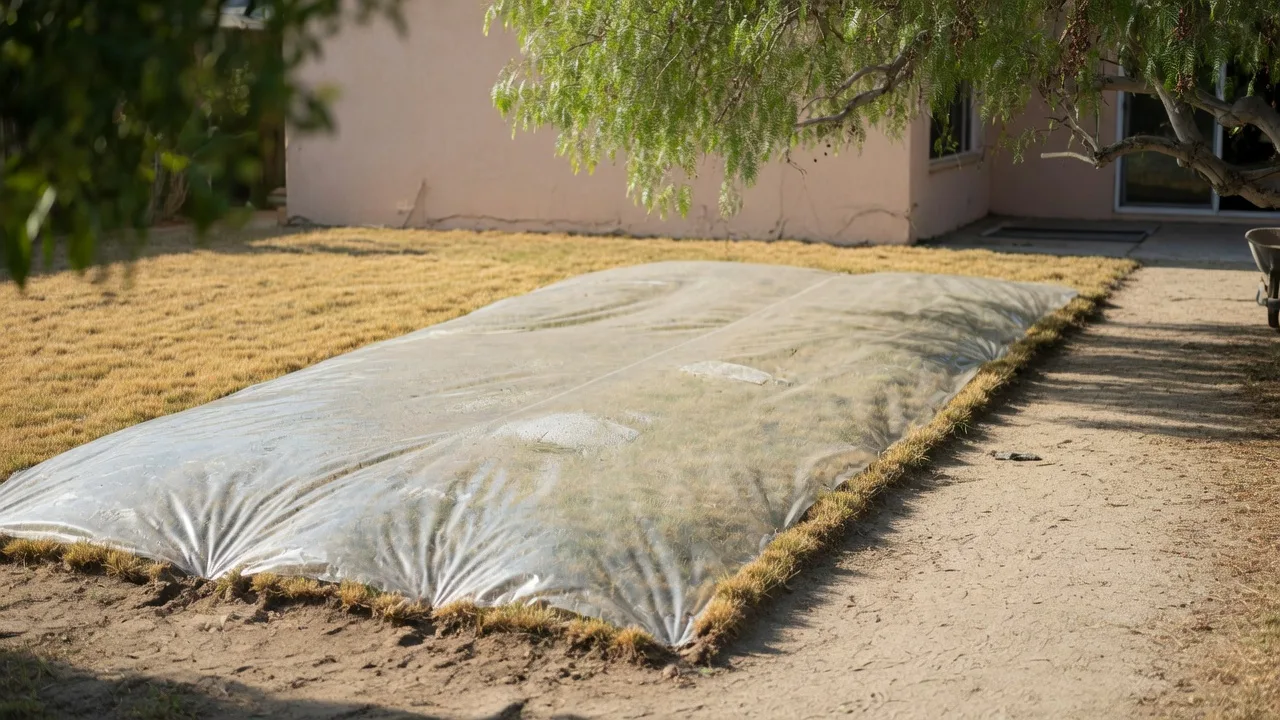
This page is the kill step. It is not the plant palette, and it is not the rebate paperwork walkthrough. Those live on the drought and rebate pages linked below.
What does “kill the grass” actually mean here?
You are trying to stop living turf, plus the seed and rhizomes sitting in the top of the soil, so the next planting does not fight a revival. San Diego lawns are rarely one species. A fescue front yard in Clairemont often hides Bermuda or Kikuyu along the driveway. Those warm-season grasses store energy in rhizomes. Mowing them to dirt and covering with bark is not a kill. They come back through the mulch.
Name the stand before you pick a method. Cool-season fescue is easier to exhaust. Bermuda and Kikuyu need heat, time, or physical removal of the rhizome layer. Nutsedge in the lawn is a different plant entirely. Solarization is inconsistent on nutsedge even in good conditions, which is why the nutsedge control page exists as its own job.
If the goal is a planted conversion, also decide whether the water agency rebate is in play. Synthetic turf is not an approved conversion option. Concrete is not a qualifying replacement. Those rules sit in the verified rebate claims, not in a contractor flyer.
When does solarization work in San Diego County?
UC IPM describes solarization as covering moist soil with clear plastic so sunlight heats the top 12 to 18 inches. Four to six weeks is the usual period. Wet the soil at least 12 inches deep. Smooth the surface so the plastic sits tight. Air pockets waste heat. Clear plastic transmits the heating rays. Black plastic absorbs and deflects part of that heat, so it is the weaker solarization film except in cooler coastal spots where weeds would otherwise grow under clear plastic.
Inland heat is the ally. El Cajon, Santee, Lakeside, Escondido, and the I-15 corridor can reach the soil temperatures the method needs in midsummer. Coastal north county, Point Loma, and the first ridge inland sit under marine layer for long stretches. UC IPM is explicit: solarization has been used on the coast during persistent warm, fog-free weather, and July is not automatically the coastal month. August or September can be the clearer window. A north-facing, shaded side yard in Encinitas is a poor candidate. A west-facing inland lot in July is a better one.
Do not treat solarization as a nutsedge or bindweed guarantee. UC IPM says control of purple and yellow nutsedge can be inconsistent even under favorable conditions. Bermuda rhizomes close to the surface may be controlled. Deep rhizomes and tubers can survive.
After the plastic comes off, cultivate shallow if you cultivate at all. Digging deep brings untreated seed up. Plant or mulch the surface so it does not sit as bare dirt.
When is sod cutting or sheet mulching the better kill?
Sod cutting is the physical removal of the living mat and a slice of soil. It is the right tool when you cannot wait four to six weeks, when the lot is too shaded or too coastal for heat, or when the lawn is mixed with irrigation you are about to rebuild. It creates a disposal problem. The cut rolls are green waste, not fill for a low spot unless the receiving site is allowed to take them.
Sheet mulching (cardboard plus organic mulch) smothers light. It is slower than solarization in full inland sun and more useful as a bed-conversion method on already-killed or already-cut lawn. It does not replace a rebate inspection that still needs living turf in place at approval.
A labeled nonselective herbicide is a chemical option some licensed applicators use on actively growing turf. Bloom Pro SD does not apply pesticides. If a matched pro uses glyphosate or another labeled product, the label governs rate, timing, and replant intervals. UC IPM’s nutsedge note is a warning even here: glyphosate on mature nutsedge often fails to move into tubers. Do not treat a mixed fescue-and-nutsedge lawn as one spray.
Skip the folklore. Salt, diesel, and vinegar-at-unknown-strength are not UC methods, and they are a liability on a lot that drains to a neighbor.
How do coastal lots, inland lots, and the rebate change the sequence?
Sequence matters more than the product name.
Rebate path. SoCal Water$mart requires approval to proceed before any turf is removed. Dead or dying turf and bare dirt do not qualify. If you kill first and apply later, you can disqualify the same square footage you wanted paid. Check your water agency and the live estimator for the address. City of San Diego watering days are not the county rulebook.
Inland path. Solarize in the hot window, or sod-cut and haul, then grade and plant into still-warm soil. East County clay holds moisture under plastic and also holds winter water after the conversion. Plan the rain garden or other stormwater feature the rebate wants before the plastic comes off.
Coastal path. Fog, salt, and thinner soils change the heat math. Encinitas, Carlsbad, Ocean Beach, and Imperial Beach lots often sod-cut or wait for a documented hot stretch rather than guessing at a June start. Ice plant on a bluff is not “already converted.” It is an invasive mat with its own removal job, covered on the ice plant page.
Slope and grading. Killing grass on a hillside is also grubbing if you disturb roots and soil. The City of San Diego defines grading as grubbing, excavating, embanking, or filling. A backyard regrade can trip a grading permit. Confirm the city or county that actually issues the permit for that address.
What should you share before requesting a contractor match?
Bloom Pro SD is a referral service. We match you with licensed, independent landscaping professionals. We do not kill lawns, pull permits, or warrant the conversion. You contract with the pro directly.
Send a wide photo of the lawn and a close photo of the grass at the worst patch. Note Bermuda or Kikuyu if you already know. Say whether rebate approval is in hand, pending, or not part of the job. Name the water agency. Say whether the lot is coastal marine layer, central-city, or inland heat. Flag irrigation you want capped versus reused. Flag slope, neighbor drainage, and HOA rules.
The crews we send quote after they see the stand, not from a photo of a tarp. Call (760) 400-6355. Booking is open. There is no published kill-the-lawn price on this site.
Frequently asked questions
Does black plastic kill a San Diego lawn as well as clear plastic?
UC IPM treats clear plastic as the solarization film because it lets heating rays through. Black plastic absorbs and deflects part of the heat. On a cool or foggy coastal lot, black plastic is sometimes used to starve light rather than to cook soil. That is a different method with a different timeline. Do not mix the two and call both solarization.
Can I kill the lawn and still get the turf rebate?
Only if the program approves the project before turf is removed. Dead or dying turf and bare dirt do not qualify. Synthetic turf is not an approved conversion. Confirm the live SoCal Water$mart rules and your water agency’s top-up, if any, for the address.
Will solarization kill Bermuda, Kikuyu, and nutsedge?
Bermuda and johnsongrass rhizomes near the surface may be controlled. Nutsedge control is inconsistent even in good heat. Deep rhizomes can survive. Mixed lawns often need a second pass or physical removal. That is a site diagnosis, not a product promise.
How long do I have to wait after herbicide before I plant?
The product label sets the replant interval. This site does not invent one. If a licensed applicator treats the lawn, get the product name and the interval in writing before you schedule plants.